Women’s sandals come in many shapes, materials and styles. While appearance matters, the right pair should also fit securely, feel comfortable and suit the way you plan to wear it.
From everyday errands to vacations and relaxed weekends, different occasions place different demands on your footwear. Before buying a new pair, consider the following factors to find sandals that work for both your wardrobe and your routine.
Start with the Right Sandal Style
The best style depends on where you plan to wear your sandals and how much security you prefer.
Slides are easy to put on and take off, making them convenient for casual outings and relaxed days. Backstrap sandals provide more security around the heel, while adjustable strap designs allow you to fine-tune the fit across the foot.
Toe-post sandals offer a simple warm-weather look, but the position and material of the toe post can affect comfort. Platform or heeled sandals can add height, although their weight and stability should also be considered.
Think about your usual activities before choosing a style. A sandal intended for short errands may not need the same fit and structure as one you plan to wear while sightseeing or walking for several hours.
Check the Footbed Shape
The footbed is the surface directly beneath your foot, and its shape can influence how the sandal feels.
Some sandals use a flat footbed, while others have raised contours around the arch, heel or toe area. More contouring is not automatically better. The right shape depends on your feet and the type of footwear you already find comfortable.
When reviewing product photographs, look at the sandal from above and from the side. Check whether the footbed appears wide enough for your forefoot and whether the heel area will keep your foot properly positioned.
Your toes and heel should remain within the edges of the footbed. A sandal that is too short or narrow can feel uncomfortable even when it has generous cushioning.
Look at the Strap Design
Straps help hold your feet in place, but their position is just as important as their appearance.
Wide straps can distribute pressure across a larger area, while narrow straps create a lighter, more minimal look. Adjustable buckles or hook-and-loop closures may provide greater control over the fit, especially around the instep.
Before ordering, consider:
-
Where each strap will sit on your foot
-
Whether the strap edges appear soft or rigid
-
How much adjustment the closure provides
-
Whether the buckle may press against your skin
-
Whether the design helps prevent your foot from sliding forward
Adjustable straps can improve security, but they cannot correct a footbed that is the wrong length or width.
Compare the Materials
Sandals may be made from genuine leather, suede, fabric, rubber or synthetic materials. Each material offers a different appearance and requires different care.
Leather and suede can develop natural variations with wear and should generally be protected from excessive moisture. Fabric straps may feel lighter, while synthetic materials can offer a wide range of colors and finishes. Rubber or molded designs may be better suited to wet environments when the product is specifically made for that use.
Do not assume an entire sandal is made from the same material. The upper, lining, insole, midsole and outsole may all be different. Check the individual product description for accurate details.
Materials can also affect the weight and flexibility of the sandal. If you prefer lightweight footwear, review the construction instead of judging by appearance alone.
Review the Outsole
The outsole is the part of the sandal that contacts the ground. Its design should suit the surfaces where you expect to walk.
Look at the tread pattern and consider whether the outsole appears appropriate for smooth indoor floors, sidewalks or other everyday surfaces. A completely flat outsole may provide less traction on certain surfaces, especially when wet.
Thickness also affects how the sandal feels. A thin sole may offer more flexibility and ground feel, while a thicker sole may provide more separation from hard or uneven surfaces.
No outsole should be assumed to be slip-proof. Walk carefully on wet, polished or unfamiliar surfaces, regardless of the tread design.
Use the Product-Specific Size Guide
Sandal sizing can vary between brands and even between styles from the same brand. Your usual shoe size is a useful starting point, but it should not be the only information you use.
Before ordering:
-
Measure both feet while standing.
-
Use the larger foot as your reference.
-
Compare the measurement with the product-specific size chart.
-
Consider the width and shape of your forefoot.
-
Read current fit information and customer reviews when available.
If you are between sizes, do not automatically size up or down. Check the guidance for that particular product because a change in size also affects the position of the straps, arch contour and heel area.
Match the Sandals to the Occasion
Consider how the sandals will fit into your existing wardrobe and daily plans.
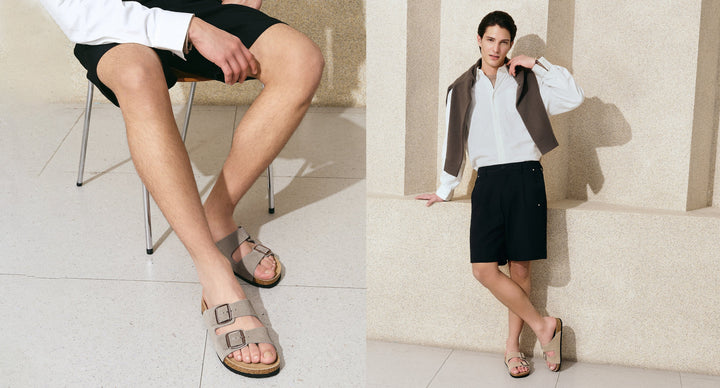
Neutral colors and simple strap designs can work with dresses, jeans, shorts and linen trousers. More decorative styles can become the focus of an outfit but may be less versatile.
For travel, consider the sandal’s weight, packability and expected walking conditions. For everyday use, prioritize a secure fit and a style that works with several outfits. For wet environments, choose footwear specifically described as suitable for water rather than assuming all summer sandals can be worn at the beach or pool.
Explore the FITORY Women’s Sandals Collection to compare different styles for casual wear, weekends and warm-weather outfits.
Try Them on Indoors
When your sandals arrive, try them on indoors before removing labels or wearing them outside.
Walk on a clean surface and check whether:
-
Your toes and heel remain inside the footbed
-
The straps feel secure without pinching
-
Your feet slide forward or sideways
-
The footbed contours align naturally with your feet
-
The sandals feel balanced while standing and walking
-
Any buckles or strap edges rub against your skin
Do not depend on an uncomfortable pair becoming suitable after extended wear. Some materials may soften slightly, but wearing sandals cannot correct the wrong length, width or footbed position.
Choose Fit Before Features
The longest feature list does not necessarily identify the best pair of women’s sandals. Comfort depends on how the footbed, straps, materials and sizing work together.
Choose a style that fits your feet securely, matches your intended use and feels comfortable when you walk. Careful comparison before ordering can help you find sandals that work naturally with both your wardrobe and everyday routine.