Leather sandals combine natural texture with a timeless design that works across casual settings. However, the upper is only one part of the shoe. The footbed, straps, buckles, and outsole also influence how a pair feels and performs.
Understanding these materials can help you choose leather sandals that suit your routine and care for them correctly.
Leather Uppers
Genuine leather is valued for its soft feel, natural texture, and ability to become more flexible with regular wear. It can give casual sandals a more refined appearance than many lightweight summer materials.
Check that the edges and inner surfaces feel smooth against your feet. New leather may initially feel firmer, but it should not cause painful pressure or restrict natural movement.
Because leather can be affected by prolonged moisture, it is generally better suited to dry everyday environments than pools or water activities.
Cork and Memory Foam Footbeds
The footbed creates the foundation beneath your feet. Cork provides structure while keeping the sandal relatively lightweight. Memory foam adds softness and cushioning to the underfoot experience.
A contoured design may also include gentle arch shaping and a defined heel area. These features can help keep the foot more comfortably positioned than a completely flat base.
Your entire foot should rest within the footbed without your toes or heel extending beyond its edges.
Adjustable Straps and Buckles
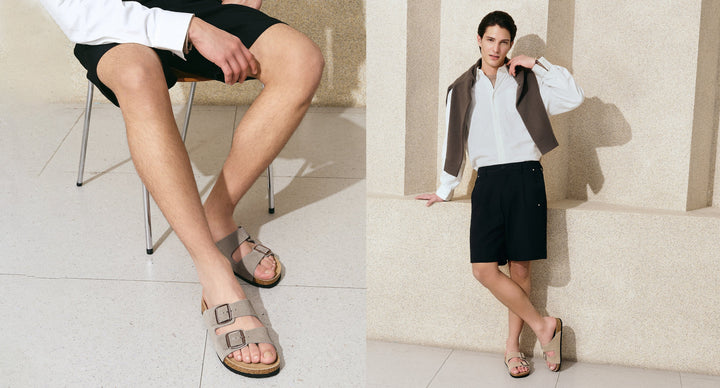
Adjustable straps make it easier to personalize the fit. They can accommodate different foot shapes and allow small changes when your feet feel different throughout the day.
The straps should hold your foot securely without pressing into the skin. After adjusting the buckles, walk around and check that your feet do not slide excessively.
Avoid tightening the straps simply to compensate for an incorrect size. The footbed itself should still match the length and width of your feet.
Lightweight EVA Outsoles
EVA is commonly used in sandal outsoles because it is lightweight and flexible. A textured EVA sole can provide a more practical walking surface than a completely smooth outsole.
Check that the sandal bends naturally near the front while remaining stable through the middle. Always take additional care on wet, polished, or uneven surfaces.
When to Wear Leather Sandals
Leather sandals are a versatile option for:
- Everyday errands
- Casual lunches
- City outings
- Dry-weather travel
- Weekend gatherings
- Relaxed workplaces
- Transitional seasonal outfits
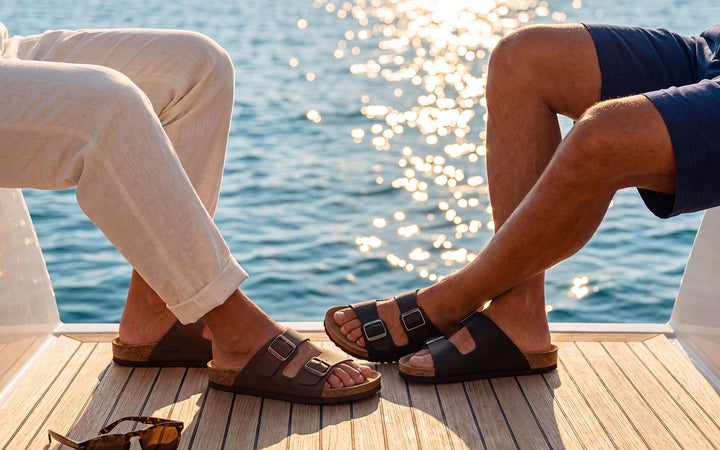
They pair easily with denim, shorts, linen trousers, and other casual clothing. For beaches, pools, or heavy rain, water-friendly sandals are usually a more practical choice.
How to Care for Leather Sandals
Remove surface dust with a soft, dry cloth after wearing your sandals. For deeper cleaning, use a product formulated specifically for leather and test it on a small, hidden area first.
Avoid soaking leather sandals or placing them in a washing machine. If they become damp, allow them to air-dry naturally away from direct sunlight and heat.
Apply a suitable leather conditioner occasionally if recommended by the product’s care instructions. Store the sandals in a cool, dry place with enough space to maintain their shape.
Choose Materials That Fit Your Routine
A quality pair of leather sandals is more than its upper. Leather provides texture and flexibility, cork and memory foam shape the underfoot feel, adjustable buckles improve fit, and an EVA outsole keeps the construction lightweight.
Choose sandals that match your daily activities, check the fit carefully, and follow the correct care routine to keep them looking their best.